
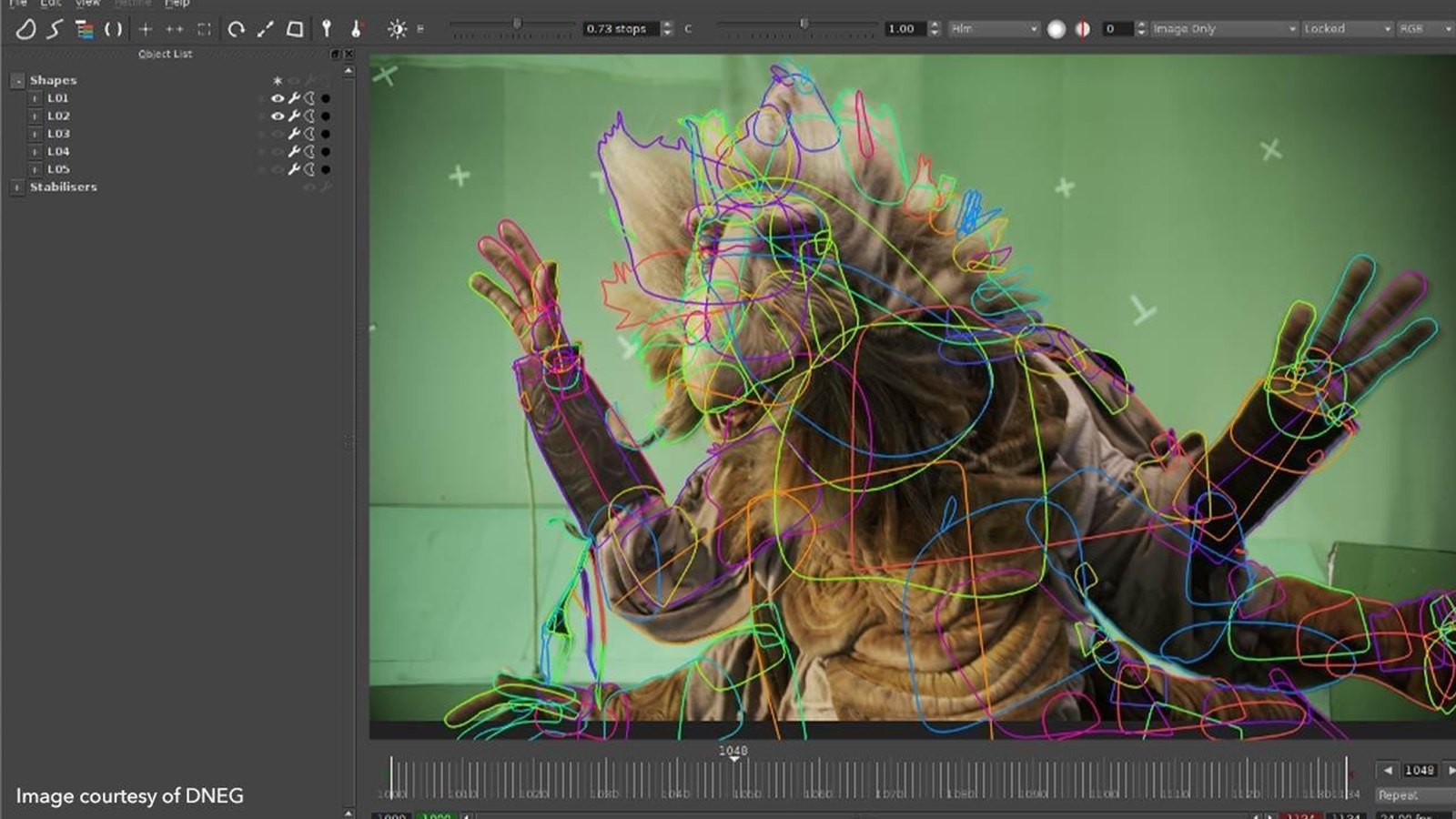
CopyCat in Nuke: Letting AI Learn Your Way of Compositing
ShareLinkedInXWhatsAppEmailLately I have been spending a lot of time with CopyCat in Nuke, and it is one of those tools that made me step back and think: this changes things.
The visual effects industry is moving into AI, maybe faster than any of us expected. From auto-roto tools to text-to-video generators, there is a wave coming. What makes CopyCat stand out is that it keeps AI under the artist’s control and lets it learn the way we work, frame by frame.
What is CopyCat?
CopyCat is a node inside Foundry’s Nuke that trains a machine learning model from a few before-and-after image pairs. If you clean up some frames by hand (removing trackers, skin cleanup, a stylised look), CopyCat studies what you did and applies the same logic to the rest of the sequence.
It is a bit like teaching a junior artist who never sleeps and never breaks your alpha channels.
How it works
- Give it training data. A few pairs of “this is what the shot looked like” and “this is what I want it to look like”.
- Train. The model learns your process, right inside Nuke, usually on the GPU in anything from a few minutes to an hour.
- Apply it. The Inference node runs the trained model across the rest of the shot.
No Python, no exporting to external tools. Everything stays in your script.
Why it matters
It saves a lot of time
Say you have to paint out a tattoo on a moving character. Normally that means frame-by-frame work, a SmartVector pass and plenty of cleanup. With CopyCat you train it on a few clean frames and it works out the rest.
It respects your look
Unlike one-click AI tools with unpredictable results, CopyCat learns from your own manual work, so the final result still feels like your comp.
It is built for compositors
You are not asked to be a machine learning engineer. You work the way you always do, and Nuke handles the heavy lifting.
It is ideal for repetitive work
Beauty work, stylised comps, cleanup and roto refinement: whenever you have dozens of similar frames to process, it earns its place. It is especially useful on series and commercials, where high shot counts meet tight deadlines.
Where I use it most
- Marker and rig removal
- Skin smoothing and beauty work
- Tattoo replacement
- Stylised render passes
- Subtle distortion effects
I am still surprised by how good it gets with just five to ten training frames.
CopyCat compared with traditional workflows
| Task | Traditional workflow | With CopyCat |
|---|---|---|
| Marker removal | Paint every frame | Train once, apply across the sequence |
| Roto cleanup | Manual, frame by frame | Learns shapes and motion |
| Stylisation | Complex colour corrections | Learned from sample frames |
| Beauty work | Paint, blur, soften | Learns skin tones and texture |
AI in VFX is not the future. It is now.
What CopyCat shows is that AI is not only about fully automatic results. It is a collaboration between the artist and the machine. We set the look and define the logic, and the model carries it forward faster and more consistently than we could alone. It is not about replacing artists. It is about amplifying what they can do.
Final thoughts
To me, CopyCat is one of the tools that shows Nuke stepping into a new era. It keeps creative control with the artist while taking away the grunt work, and that is what good AI should do. Whether you are a senior compositor or just starting out, it is worth exploring. I will follow up soon with real production examples and the tricks I have picked up along the way.
Vishal Dharsha J, Founder and Creative Head, Perfekta FX